
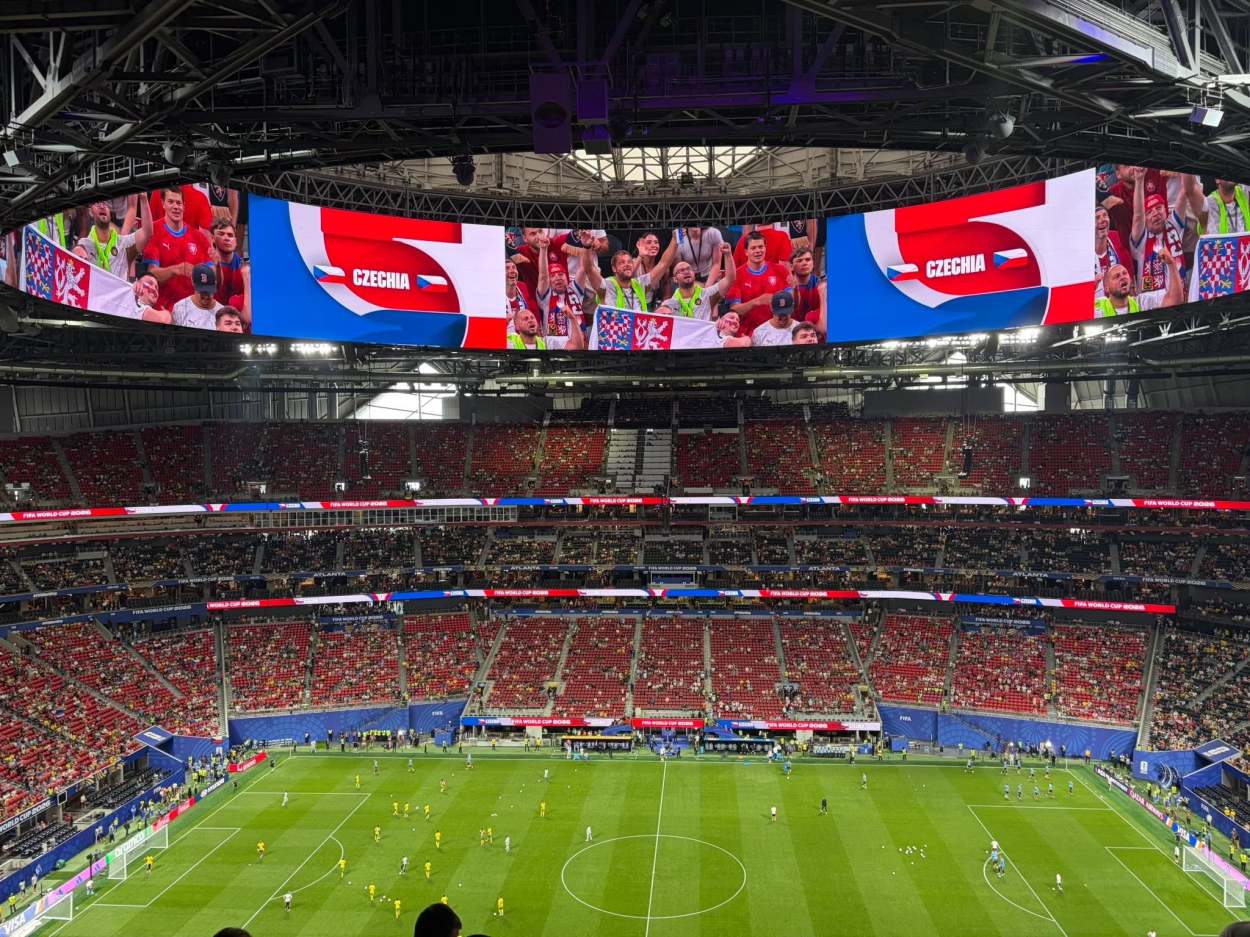
Now that World Cup 2026 is in the record books, with the best team (in the true sense of the word), Spain, worthy winners, it feels like an apposite time to look back on the most recent incarnation of the greatest football show on earth.
Choice of Host Nations
In comparison to the contentious decisions to appoint Russia as hosts in 2018, Qatar in 2022, and Saudi Arabia without competition for 2034, the selection of three North American countries as co-hosts for 2026 felt far less controversial. Even though at the time Donald Trump was in his first tenure as President of the United States, the proposed tournament was very much promoted as a: “unifying, financially lucrative, and safe choice.”
The events that Trump has instigated since his return to the White House just 18 months ago, including but in no way limited to: launching an attack on one of the competing nations, imposing travel bans on several others, and creating trade-based friction with the other co-hosts; inevitably called into question whether the tournament should actually be permitted to take place, and/or whether participating countries should have considered boycotting the event based on the geopolitical situation? So, what was the tournament like?
Ticketing & Cost
Going to a World Cup has never been a low-cost endeavour. The prestige of the tournament, arguably understandably, means that premium prices can (just about!) be justified. Similarly, airlines, travel companies, hotels etc all look to maximise their income from these time-limited events. In essence this isn’t very different to the way that the Olympics and other comparable major events operate and is the very definition of the market economy in all its “glory”. However, the sheer undisguised price-gouging that took place ahead of the 2026 tournament crossed a line for many football fans.
With ticket prices ranging from $140 (approximately £105) up to a staggering $700 (more than £500) just for the group matches, and those for the knockout stages and final itself rising to reach four figures, many fans were simply priced out of even thinking about attending. That is of course without mentioning the cost of air fares, food and drink, accommodation, travel to and from stadiums and everything else. The founder of the World Cup, Jules Rimet who devised the competition with the intention of “fostering global unity and promoting peace through sport” must have been turning in his grave!
Beyond the sheer cost, the whole ticket application process was nothing short of shambolic. In the past it was straightforward: you picked the matches you wanted to try to get tickets for and the price category, entered the ballot and you were either successful or not. This time there was an exclusive pre-sale for Visa cardholders only, with the “open ballot” only coming once the fixtures and venues had been confirmed, so that FIFA could use their dynamic pricing to judge which games could be set at the very highest prices. However, if the rumours of significant amounts of tickets still being available for up 80% of the matches just days before the tournament got underway are to be believed, it can only be hoped that these tactics backfired spectacularly.
We had planned on applying for matches in Atlanta, Monterrey and Guadalajara as a group of six, but the limits on the numbers that could be included in each applicant group meant that we had to apply separately. While my wife and I were successful in securing tickets to games in Atlanta and Monterrey, our regular World Cup travelling companions got none and were forced to enter the Wild West-like world of the resale platform. It was then especially galling to find there were plenty of empty seats near us when we attended the games themselves (they were all on the concourses weren’t they Gianni!).
FIFA
What is it that FIFA (a non-profit association under Swiss law, lest we forget!) are supposed to stand for as an organisation? If I were to hazard a guess, I might suggest that it should be all about: governing the sport on a global basis, enforcing the rules of the game, organising the World Cup and other competitions, and reinvesting the revenues generated into the development of football worldwide. Not cosying up to politicians with a simply ridiculous Peace Prize. Nor is it about squeezing every single last dollar out of susceptible (gullible?) fans, nor is it about spending income strategically to enhance the president’ s powerbase to ensure that he stays in power long into the future.
While we have known for quite some time that world football’s governing body is more focused on revenue maximisation than anything else, it increasingly feels as if the World Cup is solely for the benefit of the economy of the host country and FIFA itself. Rather than the football fans all over the world that it is supposed to serve.
While there will always be a demand to attend the World Cup, FIFA should be wary of just how far it can push things without facing something of a backlash. As eminent football writer Jonathan Wilson put it on the Outside Write podcast hosted by Chris Lee ahead of the tournament: “it feels as if the goose that lays the golden eggs is about to be killed.”
As if all of that wasn’t bad enough, FIFA absolutely surpassed themselves with the handling of the Folarin Balogun sending off, or should I say: finding a way to circumvent their own rules and regulations at the self-alleged behest of Mr Trump.
While Balogun’s red card seemed very harsh, to the letter of the laws of the game and to try to ensure consistency in refereeing decisions, it was sadly merited. In the absence of an appeals process in the World Cup, unlike other leagues and tournaments, then unfortunately these decisions simply need to be accepted, no matter how hard done by a team/ player feels. Throughout history there have been a litany of dismissals that partisan fans will argue were incorrect, to allow appeals would of course simply open an unmanageable can of worms.
So to then allow a politician to influence a FIFA decision is simply unacceptable, if not just blatant corruption. Infantino of course suggested that it was nothing to do with him it was the decision of the independent FIFA Disciplinary Committee, which of course the President of FIFA has nothing to do with? Yeh right Gianni, pull the other one, it’s got a f*ck*n’ bell on it!
Of course, there is a very recent precedent for this when 2 matches of Cristiano Ronaldo’s automatic 3-match ban for a red card for violent conduct were miraculously deferred for a 1-year probationary period, and he was available for the start of the World Cup. (The churlish amongst us might suggest that Portugal should have appealed the suspended suspension given how ineffective CR7 was during the tournament!). In both cases Chapter 4, Article 27 of the FIFA Disciplinary Code has been cited which allows the suspension of all or part of a disciplinary sanction. However, it does not mention the circumstances in which the judicial body may decide to suspend a sanction. Convenient? I’ll let you make up your own minds!
Fans / Fan Culture
The sheer cost involved, along with entry restrictions, visa difficulties etc. inevitably meant that the type of fan attending the tournament matches was very different from what we have been used to. In fact, this started in Qatar three and a half years previously, but it was noticeable that the majority of those in attendance at the stadium were locally-based people with sufficient disposable leisure income wanting to experience an event, rather than fans following and supporting their team because that’s what they always do.
In essence there is nothing inherently wrong with that, and no one wants a return to the dark old days of the 70’s and 80’s, but inevitably it alters the experience of being at a football match. Instead of a tense and passionate atmosphere with people completely and utterly focused on the result, it is increasingly about fancy dress, Mexican waves, face paint etc, with TV producers seemingly more focused on which celebrities have turned up to show their never-before-mentioned “love and passion” for the game of “soccer”.
Thankfully we had the Tartan Army and their hijinks and adventures in Boston and Miami, and the Norwegians with their hugely impressive Viking Row, to name just the two best, to show the good folks of the U.S. of A. the humorous and fun side of football fandom.
Expanded Format
Ahead of the tournament I am sure I wasn’t alone in fearing that the much-vaunted expansion to 48 teams would dilute the overall quality of the competition. In the past there have been plenty of dead rubber games at the group stage, adding 16 more teams of a lesser quality could surely only exacerbate that further. However, thanks largely to the exploits of the likes of Curacao and Cape Verde that didn’t feel like the case. Yes, there were several teams: Haiti, Tunisia, Iraq, Jordan, Uzbekistan and Panama who failed to register a single point; yet somehow the much-feared lack of jeopardy didn’t seem to materialise. Heck, Scotland even managed to not qualify for the knockout phase despite how easy it was supposed to be! (With my humblest apologies for any members of the Tartan Army reading this!).
More of an issue was the fact that the dramatically increased match schedule, combined with the time differences, made it hard to keep up with every match, which for those of us of a geeky football obsessive nature was frustrating but (just about!) survivable. Equally, the fact that 8 of the 12 third placed teams went through meant that teams and supporters were literally hanging around to find out if they were staying or going home.
It is of course a difficult balancing act, with competitions with a smaller number of participants (think the Euro 8- and 16-team formats of the past) offering tense and exciting matchups all the way through but meaning that decent teams miss out altogether; compared to making qualification too broad resulting in the group stage feeling drawn out and dull as happened in the Champions League before that was recently reconfigured.
Once we got into the knockout rounds, with an additional round to negotiate this time of course, the contests were generally relatively evenly matched with some being decided from the penalty spot, although admittedly there weren’t too many surprises either except for possibly Germany being eliminated on penalties by Paraguay.
The Football Itself
Echoing the thoughts on the expanded format, once the tournament got underway the quality of the matches and the football played was better than expected. The attacking nature of the modern game meant that there were plenty of goals, with a higher average goals per game than any of the most recent versions of the tournament. While it could be argued that there were too many games, at least in the early stages, that also meant that the teams had a decent rest in between fixtures which probably helped the quality of the football.
Equally, in the opening couple of rounds of matches it felt as if VAR was deliberately being less intrusive, and the referees were not only letting more go but were also not standing for any play-acting. Those initiatives along with the speeding up of restarts, especially throw-ins (something I would be all in favour of keeping going forward!), helped the games flow and make them much more enjoyable to watch. As the tournament progressed, as is so often the case, those positive initiatives seemed to be forgotten, and some games became more fractious and stop/start. We also got some mind-boggling technology-based decisions Croatia’s last minute “equalizer” against Portugal being ruled out because of a microchip inside the ball, being the most bizarre of the lot. Seriously? Is that where we’re going with this?
Ahead of the World Cup in 1994, the big fear was that with the tournament being hosted in the States, where the most popular sports readily lend themselves to commercial breaks, was that the game would be divided into four quarters to satisfy the demands of the TV companies. While that was admirably resisted, this time around they were introduced under the guise of “hydration breaks”. While in ridiculously hot conditions player welfare should of course be paramount, the fact that many matches took place in air-conditioned stadiums, or in tepid weather conditions, exposed the breaks for what they really were: advertising breaks.
Do not even get me started on the final itself with a pre-match show, a 27-minute(!) half-time show and then a closing ceremony after the trophy was awarded. I mean who actually asked for this? I think I know a little bit about football fan culture, and I have never heard any football fan say: “what we really need is a longer half-time!” It was yet another example of the powers-that -be trying to turn the game we love into an entertainment event. No thanks, I’m quite happy with it staying a football match!
Quality of the Stadiums
Unlike its predecessor in Qatar, for this tournament the stadium and transport infrastructure was already in place. Although depending on the matches attended it is likely that fans will have had very different experiences.
In the States, all the stadiums used were NFL stadiums, and while they were spectacular, we know that going to a gridiron game, with its tailgating tradition, is a very different experience to going to a football match in Europe or South America.
Equally some of the venues are quite some distance from the city which they serve, and it is well-documented that some of the transport and taxi companies looked to exploit this to the absolute maximum. Given how much cash was being generated by the whole event, would it have been so difficult to allow free transport, or lay on shuttle buses for the harder to reach venues, as happened in Russia and Qatar? We were very fortunate in our choice of Atlanta as the stadium is easily walkable from the centre of town and is also served by public transport. Although like all American football venues, the narrower playing field meant the touchlines felt a bit squeezed in.
While I can’t comment on the stadiums in Vancouver and Toronto, those in Mexico carried huge nostalgia for me, as I remember hearing the names of the cities while watching the 86 World Cup as a teenage football obsessive. The stadium in Monterrey while a completely different one to that of 1986, is not only located in a stunning setting at the foot of the Cerro de la Silla mountain but feels like the bona fide football ground that it is. I only wish we could have visited the Azteca and Guadalajara as well.
Unlike in previous tournaments the choice of concessions and pricing was left to the companies running the stadiums. While we heard and read of people being forced to pay exorbitant prices elsewhere, once again we were lucky that Atlanta Falcons owner, Arthur Blank, bucked the trend by keeping prices reasonable enough ($2 hot dogs, $3 nachos and $12 large beers) working on the principle that if you don’t rip people off, they will in all likelihood buy more when they are there. As expected, the prices in Monterrey were reasonable enough as well.
Where do we go from here?
Going forward it remains to be seen how those with the power and money will continue to try to influence this special tournament, inevitably for the worse. Sadly, I think we can expect more expansions of participants, more selection of hosts based on power and influence, and even more blatant disregard of what us the true fans really want.
Maybe at some point there will be a revolution, a return to Jules Rimet’s core principles that drove the founding of the World Cup, specifically: global peace and unity, professionalism for the masses, a truly global reach and merit over social class; however, I for one won’t be holding my breath!
Football Nerd
 football nerd